Named Kite Spots
The Lagoon
All LevelsThe 45 × 18 km main arena. Side-shore NNE trade wind works for all skill levels — beginners ride the shallow edges, freestylers own the open middle, foilers exploit the flat pockets. Wind builds from 10 AM, peaks post-2 PM.
Hazards: Chop in strong wind mid-lagoon, gusty near dunes, crowded in high season
Access: Direct from camp beach
Speed Spot
Intermediate–AdvancedThe community's prestige spot — butter-flat water formed by the receding tide exposing a shallow sandbar. Benchmark for fast riding, speed records, and high-end freestyle. Only accessible at LOW TIDE.
Hazards: OFFSHORE wind — if you crash, you drift away from shore with no independent safety. Crowding at peak. Low-tide only.
Access: 15-min downwind kite from camps, or 4x4 tractor (€15)
Dune Blanche
Intermediate+The Instagram-famous white sand dune rising from the lagoon 30 km out. Jump off the crest and land in flat turquoise water, or work the protected flatwater in its lee. Flamingos gather here. Return by support boat.
Hazards: Jump requires solid kite control; boat-dependent for return
Access: Downwind kite excursion (~€35 with safety boat)
Oum Lamboiur / West Point
AdvancedThe GKA Kite-Surf World Cup venue. A right-hand Atlantic point break that wraps around the coast with long peeling waves. This is Dakhla's other face — raw, powerful, ocean-facing. Best October through March when Atlantic swells activate.
Hazards: Gusty cross-offshore wind, strong Atlantic swells, not for beginners
Access: 30 minutes by 4x4 from lagoon camps
Lassarga (La Sarga)
All LevelsCoordinates pending: local verification required
The southern tip where lagoon meets ocean. November–March produces waves up to 1 km long from the point to the fishing village. Home to ION Club Ocean Vagabond ecolodge. Both flat water and wave options from a single spot.
Hazards: Wave side requires intermediate+ skills; separate from main camp cluster
Access: Car or boat required from main camps
L'Or (Pointe de l'Or)
Intermediate–AdvancedA golden-colored point break wrapping around a small cliff with waves breaking for up to 400 meters. Closer to the main camp cluster than Oum Lamboiur — the nearest wave option for lagoon camp guests.
Hazards: Exposed point break conditions
Access: 10 minutes by 4x4 from main lagoon camps
Dragon Island
AdvancedA shell-covered rocky island accessible at low tide on foot. Ocean-side bay forms a natural wave kiting arena. Also a popular SUP and boat excursion destination — natural clay on the island, panoramic lagoon views.
Hazards: Rocky terrain, advanced wave conditions
Access: Low-tide walk or boat trip
Arich
Intermediate–AdvancedCoordinates pending: local verification required
One of the longest waves in the region, near a traditional Moroccan fishing village. Uncrowded. The antidote to Speed Spot crowds. Requires a 4x4 excursion — worth organizing through your camp.
Hazards: Remote location, 4x4 access required
Access: 4x4 from camps (~€150 per group up to 5)
Secret Spot / East Bank
Intermediate+Flatwater areas on the eastern bank of the lagoon, associated with the White Dune Canyon hotel zone. Referenced by ION Club for foil and freestyle sessions. Specific conditions unconfirmed independently.
Hazards: Conditions not independently verified — flag for local confirmation
Access: Via White Dune Canyon camp
Wind & Conditions
| Month | Wind | Windy Days | Water Temp | Notes |
|---|---|---|---|---|
| Jan | 12–18 kts | ~60% | 17–19°C | Wave season; lighter winds |
| Feb | 12–18 kts | ~60% | 17–19°C | Wave season active |
| Mar | 10–22 kts | 60–65% | 19°C | Wind building; wave season ending |
| Apr | 18–25 kts | ~75% | 19–20°C | Season begins; more reliable |
| May | 20–28 kts | ~80% | 20°C | Good conditions, building |
| JunPEAK | 25–35 kts | 85–90% | 21–22°C | Peak season opens |
| JulPEAK | 25–35+ kts | 90%+ | 22–24°C | Peak: powerful, gusty afternoons |
| AugPEAK | 25–35+ kts | 90%+ | 22–24°C | Peak: 35+ knot gusts possible |
| Sep | 18–25 kts | ~85% | 24°C | Excellent; less gusty than peak |
| Oct | 18–25 kts | ~80% | 24°C | Good kite + wave season opens |
| Nov | 15–22 kts | 70–80% | 22°C | Shoulder; wave season builds |
| Dec | 12–20 kts | ~60% | 18–19°C | Lightest month; wave season |
Kite Size Guide
General rule: 2–3 kites covering 7–12 m covers most of the season for an intermediate rider at 75–80 kg
Water & Wetsuit
Atlantic currents keep water cooler than air temperature suggests — don't be fooled by the 35°C desert air.
Tide Is a Character Here
Low tide exposes shallower, flatter pockets along the lagoon edges and unlocks Speed Spot access — the receding water creates the sandbar step that produces butter-flat conditions. High tide raises water level, increases chop, and closes Speed Spot entirely. Full moon and new moon periods produce larger tidal swings that create entirely new explorable areas. Plan your sessions around the tide table, not just the wind forecast.
Camps & Accommodation
Choose Your Base
The camp you pick shapes the whole trip. Lagoon camps (Apr–Oct) are the kite world. Wave camps (Oct–Mar) are a different planet. Luxury properties connect you to a third Dakhla entirely.
Dakhla Attitude
Lagoon CampThe largest kite resort. Three zones: Dragon Camp, Windhunter, Speed Spot accommodation. Bustling, social, best lagoon position.
Highlight: Best lagoon access; rescue boats on site
Dakhla Spirit
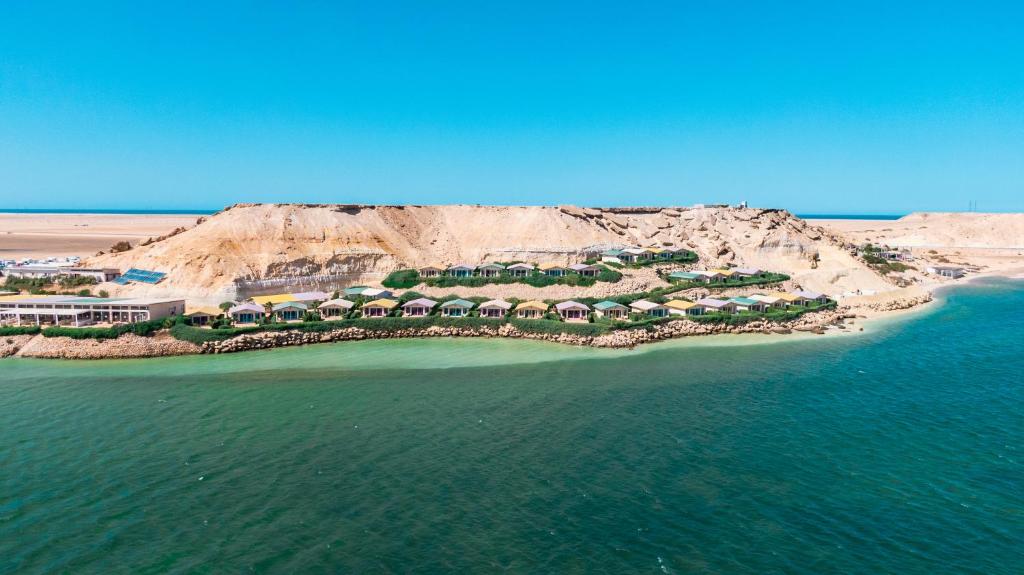
Lagoon Camp30 renovated hillside bungalows. Official base hotel of the Dakhla Downwind Challenge. Founded by Morocco's first pro kitesurfer, Soufiane Hamaini. Community-focused.
Highlight: DDC headquarters; authentic Moroccan atmosphere
White Dune Canyon + ION Club
Lagoon CampEco-lodge in the 'Golden Triangle.' Solar-powered desalination, filtered wastewater for kitchen garden. Infinity pool, yoga shala. ION Club operates full school.
Highlight: Best eco credentials; highly reviewed ('best place I've ever kited')
La Tour d'Eole
Lagoon CampUpscale ecolodge at the quieter south end of the lagoon. Home of the Bruna Kajiya-associated Ocean Academy. Vegetables from the hotel's own garden. Reviewers describe food as 'Michelin-worthy.'
Highlight: Food-destination camp; private kite beach
KBC / Dakhla Club
Lagoon CampGerman-run on the eastern shore. Known for precise safety protocols and professional organization. Large pool, hammam, gym, F-ONE Pro center.
Highlight: ~60 F-ONE kites; German efficiency; family-friendly
PK25 Dakhla
Lagoon CampSocial and laid-back vibe. 100+ Cabrinha kites with unlimited gear swaps. Food highly praised. Reports of older rental kite condition — verify before booking.
Highlight: 100+ kites; unlimited swaps; social atmosphere
Oasis212
Lagoon CampDry CampEco-hotel away from the main camp cluster. Wellness programs, lagoon-view cottages. DRY CAMP — no alcohol served. ION Club on site with North equipment. Serves a meaningfully different guest profile.
Highlight: Dry camp (notable for Muslim travelers); serene and wellness-focused
Auberge des Nomades du Sahara
Lagoon CampOwner-run auberge on the lagoon strip. A smaller, more personal alternative to the large kite resorts — known for its Saharan hospitality and direct lagoon access. Website: auberge-des-nomades-du-sahara.com
Highlight: Authentic local auberge; lagoon access; +212 6 62 89 96 42
Westpoint Dakhla
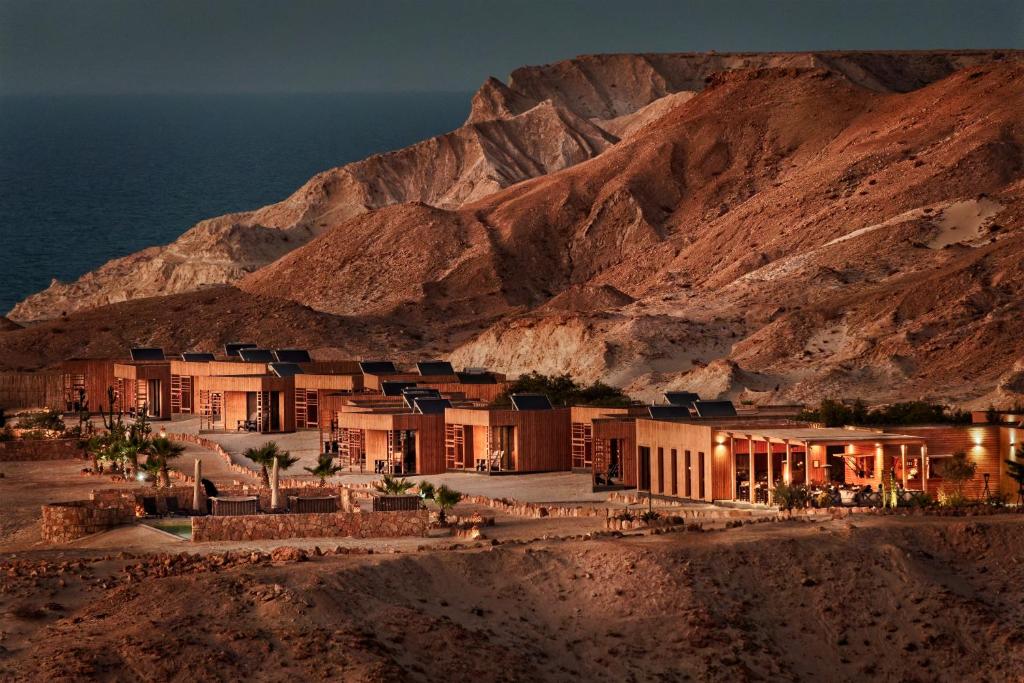
Wave Camp40 eco-cottages on the cliff above the Atlantic at Oum Lamboiur. Sandbag construction. Solar panels. Oceanfront Pescador restaurant. DJ nights. This is wave camp Dakhla — completely different feel from the lagoon.
Highlight: GKA World Cup venue; October–March wave season
Ocean Vagabond Lassarga (ION Club)
Wave CampEcolodge built on stilts to resist tides. Between ocean and desert. Ranked #4 of 33 Dakhla hotels on TripAdvisor. Live music evenings, outdoor fireplace.
Highlight: Best for wave season (Nov–Mar); wild nature setting
Caravan by Habitas
Luxury24 rooms across four styles (Desert Riad, Dune Villa, Lagoon Loft, Oasis Villa). Levante restaurant called 'outrageously good.' Michelin Guide listed. Naish kite school partnership.
Highlight: Best restaurant in Dakhla; design-led boutique experience
Safety note: Water safety at Speed Spot depends entirely on camp rescue boats being operational. Before booking, verify that your chosen camp has a functional rescue protocol. Some camps have had documented safety lapses. This is not a footnote — camp choice is a safety decision.
Culture & Landscape
The Desert Behind the Wind
The Land
Dakhla sits at the tip of the Río de Oro Peninsula — a 40-km finger of sand jutting into the Atlantic and creating the enclosed lagoon to its east. The city occupies the southern end. To the west: open ocean. To the east of the lagoon: gold desert dunes reaching 100 meters. The White Dune rising from the middle of the lagoon is the iconic image, visible from every camp.
The landscape does something unusual to the mind: white dunes, turquoise water, Atlantic horizon, desert floor — all in the same glance. The 400 km² bay and 667 km of coastline are the stage. The Sahara is the backdrop. The wind is the reason you're here.
The Sahrawi People
The indigenous people are Sahrawi Arabs — the Oulad Delim tribe, Arab Bedouin descended from Yemeni settlers who reached the Río de Oro region by the 12th century. They speak Hassaniya Arabic, a distinct dialect spanning Western Sahara and Mauritania. The cultural identity is a fusion of Berber, Arab, Sahrawi, and Spanish colonial layers. Spain held the territory from 1884 to 1975 under the name Villa Cisneros. Morocco has administered it since 1979. The political status remains unresolved internationally — it's not a subject to raise with locals.
Traditional Culture
Sahrawi men wear the darraa — a long, loose robe suited to desert heat. Women wear the melhfa, a single piece of fabric in vibrant colors. Western dress is accepted in the resort zones; modest clothing is expected in Dakhla city.
The tea ceremony is a cultural ritual, not a courtesy gesture. Three glasses are poured sequentially, each with a progressively different flavor through repeated pour-and-return aeration. Accepting tea is a signal of hospitality acceptance — participate fully if invited.
Sahrawi Music
Traditional Sahrawi music centers on the tidinit (a small three-string lute, a close relative of the Gnawa guembri and Malian ngoni), the ardin (harp played by women), and the tbal (hand drum). Modern Sahrawi bands have replaced the tidinit with electric guitar while keeping tbal rhythms and Hassaniya poetry. The genre's genealogy — tidinit to Gnawa to ngoni — traces the Saharan cultural corridor from Morocco to Mali in a single instrumental lineage. Camp evenings sometimes feature live Sahrawi bands.
Community & Pro Scene
Where the Pros Come to Compete
Kite-Surf World Cup
Dakhla's West Point (Oum Lamboiur) hosts one of the tour's most contested wave venues annually — a right-hand point break with cross-onshore winds. Prize money: €20,000. Dates: typically October.
Competition History
Also competing: Pedro Matos, Gabriel Benetton, Nourdine Mansour, Jerome Cloetens, Hannah Whiteley, Brandon Bowe, Jamie Overbeek
Downwind Challenge
500 km. Mauritanian border. 6 days. The most epic kite expedition on earth.
Founded 2015 by Soufiane Hamaini — Morocco's first professional kitesurfer and first Moroccan on the World Kite Tour. Under patronage of HM King Mohammed VI. 11th edition: August 14–20, 2026. ~50+ riders. Much of the route passes military zone — official authorizations managed by the organizer.
The Route
Base hotel: Dakhla Spirit. Support cars and rescue boats accompany all stages.
The Community
Solo travelers regularly meet other kiters at camp. The kite community at Dakhla is welcoming and international — evenings run to themed dinners, barbecue nights, Sahrawi live bands, and the weekly Pink Flamingo Parties (cocktail bar, dance floor, live music). Post-session: beer with lobster is the local ritual. The city itself has limited formal nightlife — the social scene is almost entirely camp-based, which is part of what makes it community rather than club.
Beyond the Kite
Rest Day Itinerary
Imlili Saltwater Pools
Desert Excursion160 deep saltwater pools in the middle of white sand dunes, 100 km south of Dakhla. Home to fish species found nowhere else on earth. Natural fish pedicure, traditional Sahrawi tea, full-day 4x4 adventure.
Oyster Farm
CulinaryOysters grown in a desert lagoon fed by Atlantic currents — eat them fresh at the source with the White Dune visible in the distance. Includes octopus tajine and whole baked fish. Operating hours tide-dependent.
Dragon Island Boat Trip
WaterRocky island covered in shells, accessible by boat or low-tide walk. Natural clay for skin masks, panoramic views over the full lagoon. Most camps organize 2-hour trips.
Scuba Diving & Snorkeling
WaterDakhla Diving Club operates named sites: Dakhla Bay Reef, Dragon Island Reef, Underwater Caves. Marine life: stingrays, sea turtles, octopus, occasional sharks. Snorkel from 750 MAD, dive from 1,000 MAD.
Catamaran Wildlife Cruise
WildlifeLagoon sailing with flamingo and dolphin sightings. Greater flamingos gather seasonally around the White Dune and lagoon wetlands. Pods of dolphins common in the bay.
Camel Ride
CultureSunset rides along the beach, cliff edge, and desert trails. Multiple camps organize them. Quintessentially Saharan experience — the Atlantic behind you, dunes ahead.
Quad Biking / Buggy Tours
AdventureDesert dune routes with stops at major dune formations. Multiple route options from short afternoon rides to full-day tours. Available via camp concierge and Civitatis.
Horseback Riding
AdventureBeach, lagoon, and desert trail experiences. La Tour d'Eole's excursion program is well-regarded. Sunset riding on the Atlantic shore.
Flamingo Watching
WildlifeGreater flamingos gather around the White Dune and lagoon wetlands. Also: ospreys, Audouin's gulls, pelicans. Early morning best for birdwatching. Visible on downwind kite trips too.
Food, Dining & Social Scene
Oysters in the Desert
Dakhla's food identity sits at the intersection of Sahrawi nomadic tradition and Atlantic coastal fishing. The signature story: oysters grown in a desert lagoon, eaten fresh at the farm. It's an improbable combination that captures everything unusual about this place.
Signature Dishes
Fresh Oysters
Grown in the desert lagoon, eaten at the farm. Grilled, fresh, or in creamy sauce. The signature Dakhla gastronomic paradox.
Mechoui
Whole lamb slow-roasted in an earth oven, served with salt, cumin, and bread. The Sahrawi festive centerpiece.
Camel Meat
Grilled, stewed with spices and vegetables, or served with couscous. A genuinely regional specialty — not found most places.
Octopus Tajine
Atlantic octopus in a slow-cooked spiced clay pot. Available at the oyster farm restaurant and waterfront spots.
Whole Baked Fish
2 kg whole Atlantic fish, fresh-caught, with local vegetables. The honest version of eating by the sea.
Msemen
Moroccan flatbread described by one reviewer as 'super bread.' Breakfast staple at every camp.
Lobster Tajine
The luxury local specialty, available at beachside restaurants. Pair with a sunset.
Bissara
Fava bean street food soup — the working-class Dakhla staple, eaten standing at a stall in the medina.
Named Restaurants
Reviewers call it 'outrageously good' and 'the best restaurant in Dakhla.' Mediterranean-Moroccan fusion. Michelin Guide listed.
Cliff-edge Atlantic views. Fresh fish, Mediterranean menu. DJ nights.
African, French, Italian, Moroccan fusion. Live music evenings, outdoor fireplace.
Vegetables from the hotel's own garden. 'Michelin-worthy' per TripAdvisor reviewers.
Moroccan and Mediterranean fine dining at the lagoon-edge luxury guesthouse.
Described as 'one of the best tables in Dakhla' — the city-center option.
The Social Scene
Post-kite culture in Dakhla is camp-centered. Evenings run to beach bars, sunsets over the lagoon, themed barbecue nights, and Sahrawi live bands. Beer with lobster is the quintessential end-of-session combination in camp lore.
The weekly Pink Flamingo Parties — cocktail bar, dance floor, live music — are the community social event. Chiringuito Cabana runs resident DJs, theme parties, and oriental dancers. Dakhla is not a party destination in the Tarifa or Essaouira sense; the draw is community around the sport.
Transport & Logistics
Getting There and Getting Around
Getting There
- →Casablanca (CMN) — Royal Air Maroc, multiple weekly
- →Agadir (AGA) — Royal Air Maroc
- →Marrakech (RAK) — Air Arabia
- →Paris Orly (ORY) — Royal Air Maroc, Tuesdays
- →Paris (CDG) — Transavia (seasonal)
- →Canary Islands — Binter Canarias
Kite gear: Royal Air Maroc: 23 kg kite bag free in addition to standard allowance
Visa
Visa-free: UK, EU, USA, Canada, Australia, New Zealand — 90-day stay
Passport valid 6+ months, onward travel documentation
Avoid discussing Western Sahara political status at border
Money
Currency: Moroccan Dirham (MAD)
MAD is a closed currency — must be purchased inside Morocco
Available in Dakhla city. Withdraw on arrival — limited outside city.
Withdraw odd amounts (e.g. 490 MAD) to get small bills for tips and street food
SIM Card
Best coverage including south toward Mauritanian border
SIM from ~€5; data from ~€1/GB
eSIM options: Saily, Maya Mobile, Airalo options available for Morocco
Safety
Overall: Safe destination, particularly the lagoon and resort zone
City: Safe but conservative. Modest clothing is culturally aware and considered respectful — for both men and women, clothing covering shoulders, arms, and legs may be required when entering certain establishments.
Speed Spot offshore wind requires camp safety boat. Verify rescue protocols before booking any camp.
Avoid: Western berm (militarized zone); border areas east/south toward Mauritania and Algeria
Best Time to Visit
Plan Your Trip
Book Your Dakhla Trip
Flights, accommodation, and insurance — pre-filtered for Dakhla. Affiliate links support KTP at no extra cost to you.
Stay
Accommodation with Kite School
Every camp below includes a kite school or gear rental operation. The camp you pick shapes your whole trip — lagoon position, gear brand, and vibe vary significantly.

Dakhla Attitude
Mixed
· 108 reviews

White Dune Canyon + ION Club
North
★ 4.9 · 115 reviews

La Tour d'Eole
New equipment
★ 4.6 · 209 reviews

KBC / Dakhla Club
F-ONE
★ 4.8 · 189 reviews
I was a complete beginner, so I reserved private lessons. My instructor gave very clear instructions, both for kite maneuvering and for security. I felt that I was learning as quickly as my abilities allowed.

PK25 Dakhla
Cabrinha
★ 4.2 · 423 reviews

Oasis212
North
· 134 reviews

Auberge des Nomades du Sahara
Mixed
★ 4.2 · 110 reviews
Fly
Flights
Fly into VIL (Dakhla) via Casablanca — Royal Air Maroc. Or route via AGA (Agadir) for more international connections. RAM allows a 23 kg kite bag free in addition to standard luggage.
Protect
Travel Insurance
Select the Adventure plan to cover kitesurfing. Includes gear, medical evacuation, and trip cancellation. Standard plans exclude water sports.
KTP Differentiation
What Nobody Else Tells You
Kite With the Tide
“Low tide unlocks Speed Spot and the best flatwater. High tide shifts the game. Full moon creates entirely new areas to explore. The tide is not a footnote — it is your session planner.”
No competitor explains tidal dynamics in a way that changes how you plan your day. KTP frames the tide as a character, not a condition.
The Tea Ceremony Is Not a Side Note
“Three glasses poured sequentially, each progressively different through repeated aeration. This is not a hospitality gesture — it is a window into 1,000 years of nomadic culture.”
Zero kite competitors mention the Sahrawi tea ceremony. It is one of the most culturally specific experiences available to visitors.
Oysters in the Desert
“Oysters grown in a desert lagoon fed by cold Atlantic currents — eaten fresh at the farm with the White Dune visible in the distance. This is the most improbable gastronomic experience in kitesurfing.”
The oyster farm is referenced in passing by competitors. KTP tells it as the story it deserves: a genuine culinary paradox at the edge of the Sahara.
The Two Dakhlas
“April to October: flat lagoon, trade winds, kite camps, beach bar culture. October to March: Atlantic swells, wave camps, GKA competition season, surf. Most visitors only know one of them.”
Competitors treat Dakhla as a single destination. The lagoon world and the wave world are genuinely different trips — different camps, different sport, different season.
Verified Facts
What We Know for Certain
The following facts are sourced and cross-verified. Numbers marked with sources are safe to publish.
Dakhla Airport IATA code: VIL
Source: flightconnections.com
Lagoon: approximately 45 km long, 18 km wide
Source: Multiple sources
Annual precipitation: ~33 mm (desert climate)
Source: Wikipedia
Average annual wind speed: 27 knots
Source: dakhla-attitude.ma
GKA World Cup at West Point, typically October, prize money €20,000
Source: gkakiteworldtour.com
Airton Cozzolino won GKA Dakhla 2025; James Carew won 2024
Source: gkakiteworldtour.com
Keahi de Aboitiz: 4 consecutive wins, 2013–2016
Source: wakeupstoked.com
Dakhla Downwind Challenge: 500 km, 6 days, founded 2015 by Soufiane Hamaini
Source: dakhladownwindchallenge.com
2026 DDC dates: August 14–20 (11th edition)
Source: dakhladownwindchallenge.com
Speed Spot: offshore wind, safety boat required, low-tide access only
Source: Multiple sources
Water temperature: 19–24°C year-round
Source: Multiple sources
Imlili: 160 saltwater pools, ~100 km south of Dakhla city
Source: legendesevasions.com
Oyster farm: ~20 km from Dakhla city; ~700 MAD excursion
Source: soulridercamp.com
Royal Air Maroc: 23 kg kite bag free in addition to standard luggage
Source: wakeupstoked.com
KBC / Dakhla Club: ~60 F-ONE kites, ~30 boards
Source: kiteboarding-club.com
PK25: 100+ Cabrinha kites, 75+ boards, unlimited swaps
Source: dakhlakitesurfhotels.com
Maroc Telecom: best mobile coverage in Dakhla and southward
Source: prepaid-data-sim-card.fandom.com
Oasis212: dry camp (no alcohol), ION Club with North equipment
Source: oasis212.com
Westpoint: 40 eco-cottages, sandbag construction, solar panels
Source: westpointdakhla.ma
Caravan by Habitas: from 1,650 MAD/night all-inclusive
Source: roadbook.com
Sahrawi instruments: tidinit (lute), ardin (harp), tbal (drum)
Source: melodigging.com
Population, Dakhla-Oued Ed-Dahab region: 219,965 (2024 census)
Source: Wikipedia
Spain colonized Dakhla (Villa Cisneros) 1884–1975; Morocco sole admin since 1979
Source: Wikipedia
14 Items Require Verification
These cannot be answered by any web research. They require first-hand knowledge or direct operator contact before this page goes live.
Current camp quality in 2026
Which camps have functional rescue boats? Is Dakhla Attitude's safety record improved since incidents documented in traveler reviews?
Speed Spot crowding management
Does any camp use a timed rotation at Speed Spot? How crowded does it get in July/August peak?
Pink Flamingo Parties — current venue and night
Is this still happening? Which day? Named venue or rotating?
Sahrawi cultural access for tourists
Which camps have genuine local Sahrawi staff vs. European imports? How can a kite tourist meaningfully connect with local culture?
Local restaurants in Dakhla city (unnamed)
The genuine mechoui places, fish stalls near the port, and unnamed cafes in the medina are absent from all web sources.
Imlili road conditions and access
Is the 100 km drive paved or piste? What vehicle is required? Any seasonal restrictions?
Oyster farm current pricing and tidal schedule
700 MAD figure dates from posts of uncertain age. Current availability and operating hours need confirmation.
Best camp for a solo intermediate rider in their 30s, 2026
The question every visitor has. No web source answers this with currency.
Flamingo seasonality at White Dune
Year-round or specific months? No source gives a precise season.
Wind conditions at Lassarga vs. main lagoon
Specific wind angle, strength, and tide interaction at Lassarga needs first-hand comparison.
Military checkpoint experience on Downwind Challenge
What do kiters actually encounter? How are authorizations processed?
Transavia kite luggage fee
€88 figure cited from 2017. Policy likely changed — verify current fee.
Lassarga (La Sarga) — coordinates need verification
Current pin at 23.6050,-15.9450 not manually verified against satellite imagery. Confirm exact beach/water entry point before publishing mini map.
Arich — coordinates need verification
Current pin at 23.5400,-15.9050 not manually verified against satellite imagery. Confirm exact beach/water entry point before publishing mini map.
Unverified / Flagged Claims (Use With Caution)
- !"Henry Island" as alternate name for Dragon Island — could not cross-confirm; likely local anglicized nickname
- !"355 windy days" claim — Dakhla Attitude marketing maximum. Other sources say 320–340. Use "320+" in editorial.
- !"Dream Spot" and "East Bank" — appear in WDC hotel marketing but not confirmed in community sources
- !Pink Flamingo Parties weekly at 'a central bar' — venue not specifically named
- !Camel meat widely available — no specific named restaurant confirmed as reliably serving it
- !Dakhla Attitude-connected group ownership (PK25, Lagoon Energy, etc.) — flagged by reviewer, not confirmed
FAQ
Frequently Asked Questions
What is the best time of year to kite in Dakhla?
June to September is peak season with consistent 20–30 knot trade winds and 80–90% wind days. April–May and October are shoulder months with reliable but lighter winds (15–25 knots). Winter (November–March) brings wave conditions on the Atlantic coast with a different kite experience.
Is Dakhla suitable for beginners?
Yes. The main lagoon offers knee-deep flat water extending 200+ meters from shore with zero current — ideal IKO beginner conditions. Most camps run certified beginner programs. Speed Spot and wave spots are intermediate-to-advanced only.
What are the wind conditions in Dakhla?
Dakhla receives consistent north-northeast trade winds averaging 20–30 knots in peak season (June–September), with 25+ windy days per month. Shoulder months (April–May, September–October) average 15–25 knots. The lagoon geography funnels and smooths the wind, creating reliable thermal-assisted conditions.
Are there IKO-certified kite schools in Dakhla?
Yes. Multiple IKO and VDWS-certified schools operate in Dakhla, including Dakhla Attitude, ION Club (at White Dune Canyon), KBC / Dakhla Club, and others. Most lagoon camps include certified instruction as part of their packages.
How do I get to Dakhla?
Fly into Dakhla Airport (VIL). Direct flights operate from Casablanca (RAM), Agadir, and seasonally from European cities via Transavia and TUI. Most kite camps offer airport shuttle transfers. The city is on the Río de Oro Peninsula, approximately 1,200 km south of Casablanca.
What accommodation is available near the kite spots?
Dakhla offers three types: lagoon camps (April–October, on the water, kite-in/kite-out), wave camps (Atlantic side, October–March), and luxury properties with broader resort amenities. Prices range from €60/night at budget camps to €200+/night at luxury options. Camp choice determines your kite experience — lagoon and wave are genuinely different trips.
Upcoming Trips
Book a guided experience at this spot
See all trips →From the Community
Kiter Stories
No stories yet for this spot.
Be the first to share yours